Matsuo Bashō
1644 — 1694
The wandering master who elevated the hokku into an art of stillness, season, and the fleeting present.
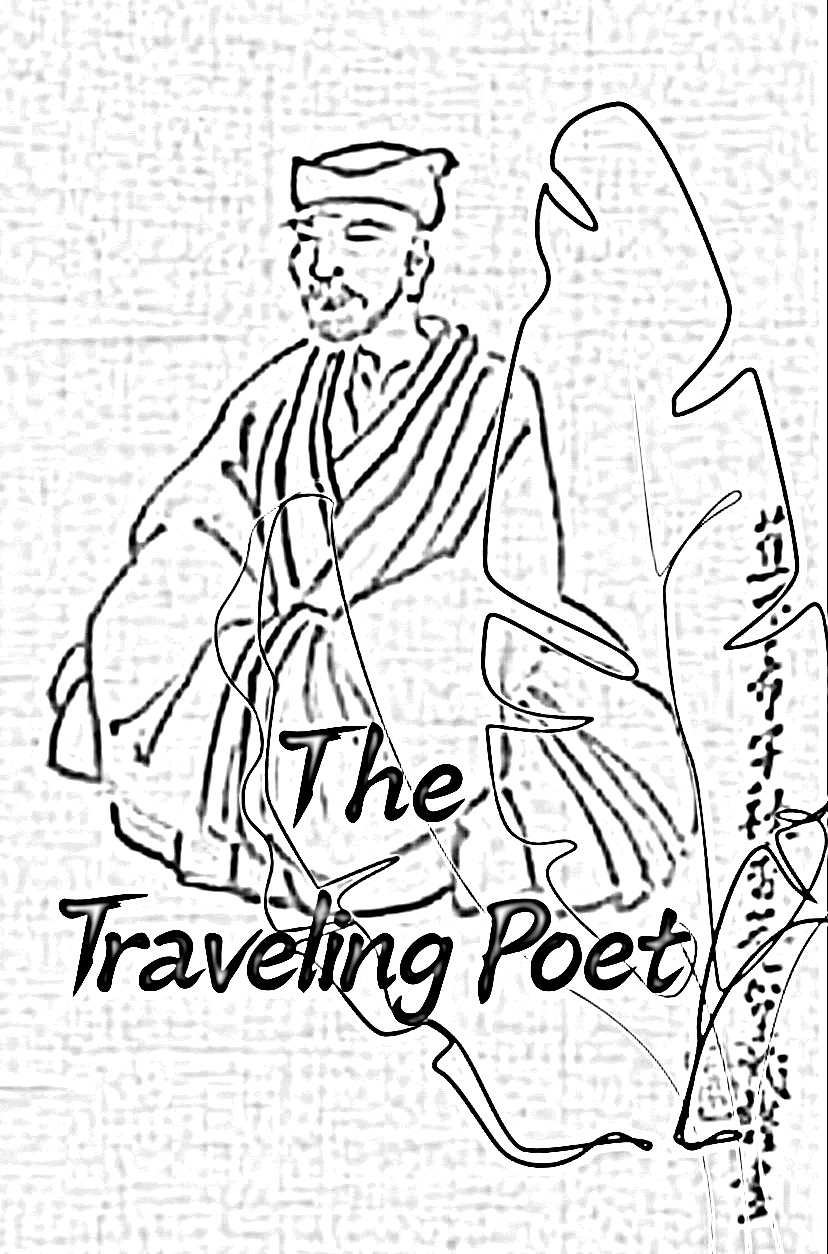
A life
in wandering
Born Matsuo Kinsaku near Ueno, in Iga Province, Bashō entered the service of the samurai Tōdō Yoshitada, with whom he first shared a love of poetry. When his young lord died, Bashō abandoned the path of the warrior and turned wholly toward verse.
He took his pen name from a bashō (banana) plant gifted by a student, planted beside the modest hut where he lived on the outskirts of Edo. The broad, easily torn leaves became an emblem of his aesthetic: beauty in the fragile and impermanent.
Restless in the city, Bashō set out on a series of arduous journeys on foot across Japan. From these travels came his celebrated poetic travelogues, culminating in Oku no Hosomichi — 'The Narrow Road to the Deep North' — a fusion of prose and haiku that remains a summit of Japanese literature.
Bashō deepened the linked-verse tradition of renga and renku, treating the collaborative chain of verses as a spiritual discipline shared among poets. He died in Osaka in 1694, still travelling, leaving a final verse dreaming of wandering across withered fields.
The road, year by year


Birth in Iga
Born near Ueno in Iga Province to a minor samurai family.
A Lord Lost
The death of his master Yoshitada turns Bashō away from samurai life toward poetry.
To Edo
Moves to the booming city of Edo to establish himself as a poet and teacher.
The Bashō Hut
Students build him a riverside hut; a banana plant gives him his enduring name.
First Great Journey
Begins the travels recorded in 'Records of a Weather-Exposed Skeleton'.
The Narrow Road
Sets out on the epic northern journey behind 'Oku no Hosomichi'.
View the road on the mapFinal Verse
Dies in Osaka; his last poem dreams of wandering withered fields.
Verses that endure
古池や 蛙飛びこむ 水の音
An old silent pond— a frog leaps into the pond, splash! Silence again.
furuike ya / kawazu tobikomu / mizu no oto
The most famous haiku ever written.
夏草や 兵どもが 夢の跡
Summer grasses— all that remains of soldiers' dreams.
natsukusa ya / tsuwamonodomo ga / yume no ato
Written at the ruins of Hiraizumi.
静けさや 岩にしみ入る 蝉の声
Such stillness— the cries of the cicadas sink into the rocks.
shizukesa ya / iwa ni shimiiru / semi no koe
At Risshaku-ji temple.
旅に病んで 夢は枯野を かけ廻る
Sick on my journey, my dreams go wandering over withered fields.
tabi ni yande / yume wa kareno wo / kakemeguru
His final poem.